

Integrated LED wall lights have the LED built permanently into the fitting, so there is no globe to change. Fittings that take a globe (E27, E14, B22 or G9) let you swap the light source in a minute. Integrated LEDs give slimmer shapes and smooth, hidden light. Globe fittings are easier to repair and change later.
That is the short version. The longer one depends on where the light is going and how long you plan to stay in the house.
What is an integrated LED wall light?
It is a wall light where the LED chips and the driver (the small electronic unit that converts 230V mains power into what the LEDs need) are fixed inside the body. You never buy a globe for it. The light source is designed in from the start, which is why integrated fittings can be so thin, or hide the light completely behind glass or stone.
A globe fitting works the old way. It has a socket, you screw or push a globe in, and when the globe dies you buy another one. In Australia the common sockets are E27 and E14 screw, B22 bayonet, and G9, a small two-pin capsule.
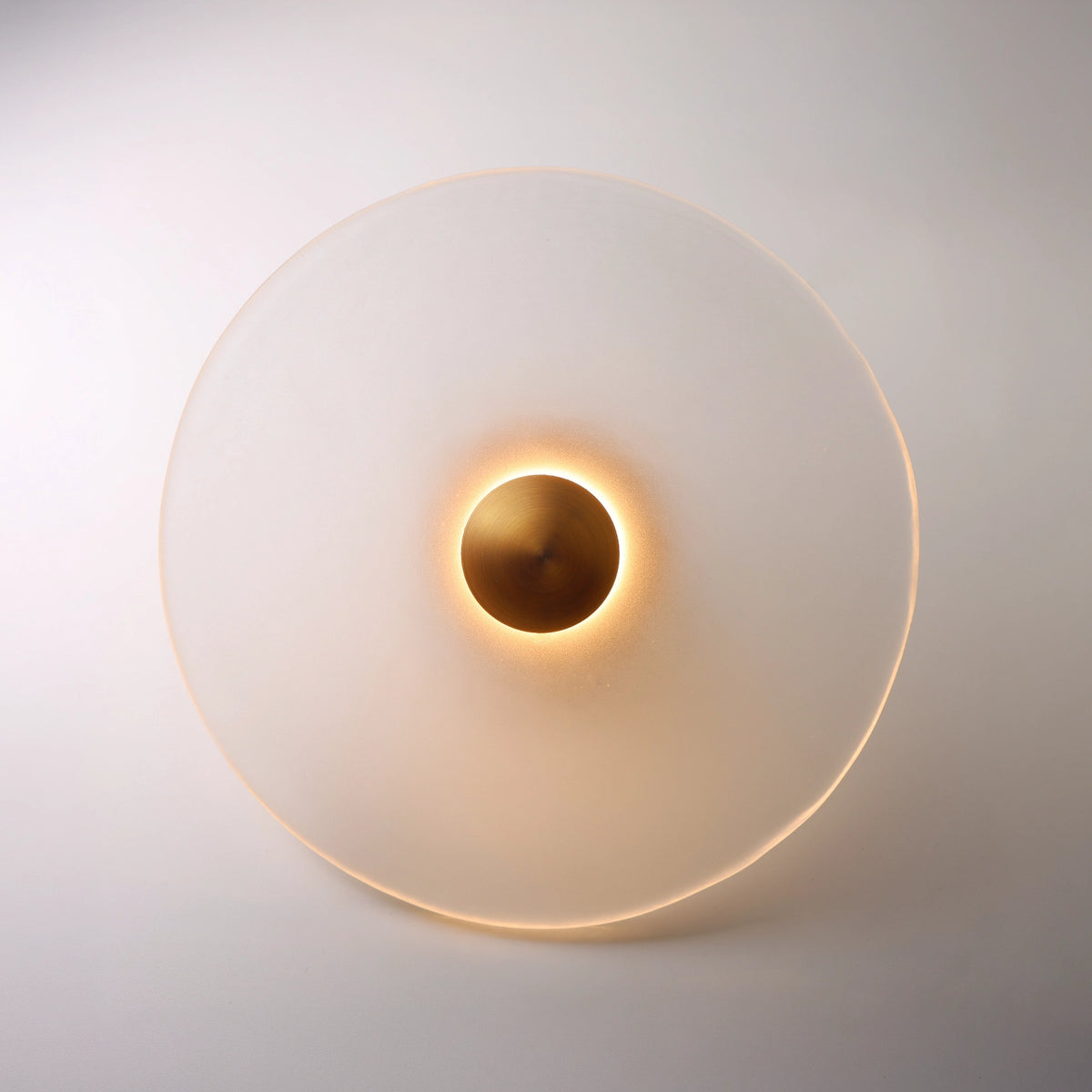
The Orbis frosted glass disc sconce is a good example of why designers like integrated LEDs. A hand-blown frosted glass diffuser sits flush over an LED ring, so the whole disc glows evenly with no bright spot in the middle. You could not get that look with a globe behind the glass.
How long do integrated LED wall lights last?
A well-made one should run for many years, but it rarely fails the way a globe does. LEDs mostly fade slowly rather than blowing. The industry measures this with a figure called L70, the point where light output has dropped to 70 percent of what it was when new. That definition comes from LED Luminaire Lifetime: Recommendations for Testing and Reporting, published by the US Department of Energy and the Next Generation Lighting Industry Alliance.
The same guide makes a point most product pages skip. A fitting can also stop dead because of something other than the LEDs, usually the driver or poor heat management. It notes that half or more of the power going into an LED can turn into heat, which has to be conducted away through the body. A fitting with a decent metal or stone body and a good-quality driver has an easier life than a thin plastic one.
So when you read a lifespan figure in hours, ask what it measures. A rated life quoted at L70 tells you about fading. It does not promise the driver will last as long.
What happens when an integrated LED wall light stops working?
Usually you replace the whole fitting, or the driver if the maker sells one as a spare part. This is the complaint that comes up again and again in homeowner forums: someone's integrated outdoor light dies after a few years and they find there is no globe to swap. If you have a matched pair, finding an identical replacement for one of them can be the bigger headache.
In Australia there is a second step. A hardwired wall light has to be taken down and put up by a licensed electrician under the AS/NZS 3000 wiring rules. With a globe fitting, you just change the globe yourself. A plug-in integrated light is simpler, because you can unplug it and swap it without an electrician.
None of this means integrated LEDs are a bad buy. It means you should buy a fitting you would happily keep for a long time, from a seller who will answer questions about parts.
Integrated LED or globe fitting: which suits your room?
Here is how the two compare on the things people actually ask about.
| Question | Integrated LED | Globe fitting |
|---|---|---|
| Look of the light | Even, hidden source, no hot spot | Depends on the shade; a clear shade shows the globe |
| Shape of the fitting | Can be very slim or flush | Needs room for the socket and globe |
| When the light fails | Replace the fitting or driver | Swap the globe in a minute |
| Changing colour temperature later | Fixed, unless the fitting has a selector switch | Buy a warmer or cooler globe |
| Smart control | Through a smart switch or dimmer only | Smart globe or smart switch |
| Best for | Feature pieces, slim hallways, glowing stone | Bedside reading, rentals you may leave, rooms where you like to experiment |
Our view: put integrated LEDs where the shape matters most, like a hallway where a slim profile keeps the walkway clear, or a feature wall where you want the stone or glass to glow with no visible globe. Choose globe fittings by the bed and anywhere you might want to change the colour or brightness later.

Can you change the colour or dim an integrated LED wall light?
You can't change the colour unless the fitting was built with a colour selector, and you can only dim it if the product says it is dimmable. With a globe fitting, both choices come down to which globe you buy.
Colour temperature matters more than people expect. The Remy copper-tone sconce takes a G9 LED and gives a warm 3500K glow through its smoky glass. Most living areas and bedrooms feel best somewhere around 2700K to 3000K, and our guide to warm white vs cool white goes through it room by room.
Dimming is where integrated fittings catch people out. An integrated LED that is not built for dimming can flicker or hum on a dimmer, and you can't fix it by buying a different globe. Check the product page before your sparky installs it on a dimmer, and read how to dim wall lights if you are planning one.
What should you check before buying an integrated LED wall light?
Run through these five things on the product page or spec sheet. If the answers are missing, ask the seller before you buy.
- Colour temperature in kelvin. Look for a number, ideally 2700K to 3000K for living spaces.
- Whether it is dimmable, and with what type of dimmer.
- Light output in lumens, so you know if it lights the space or just decorates the wall.
- What the lifespan figure means. Hours at L70 describes fading, not driver life.
- Whether it is rated for where you want it. An indoor fitting is for dry indoor areas only.
If you'd rather keep the option of changing globes, our guide to which globe your wall light takes explains E27, E14, B22 and G9 in plain terms.

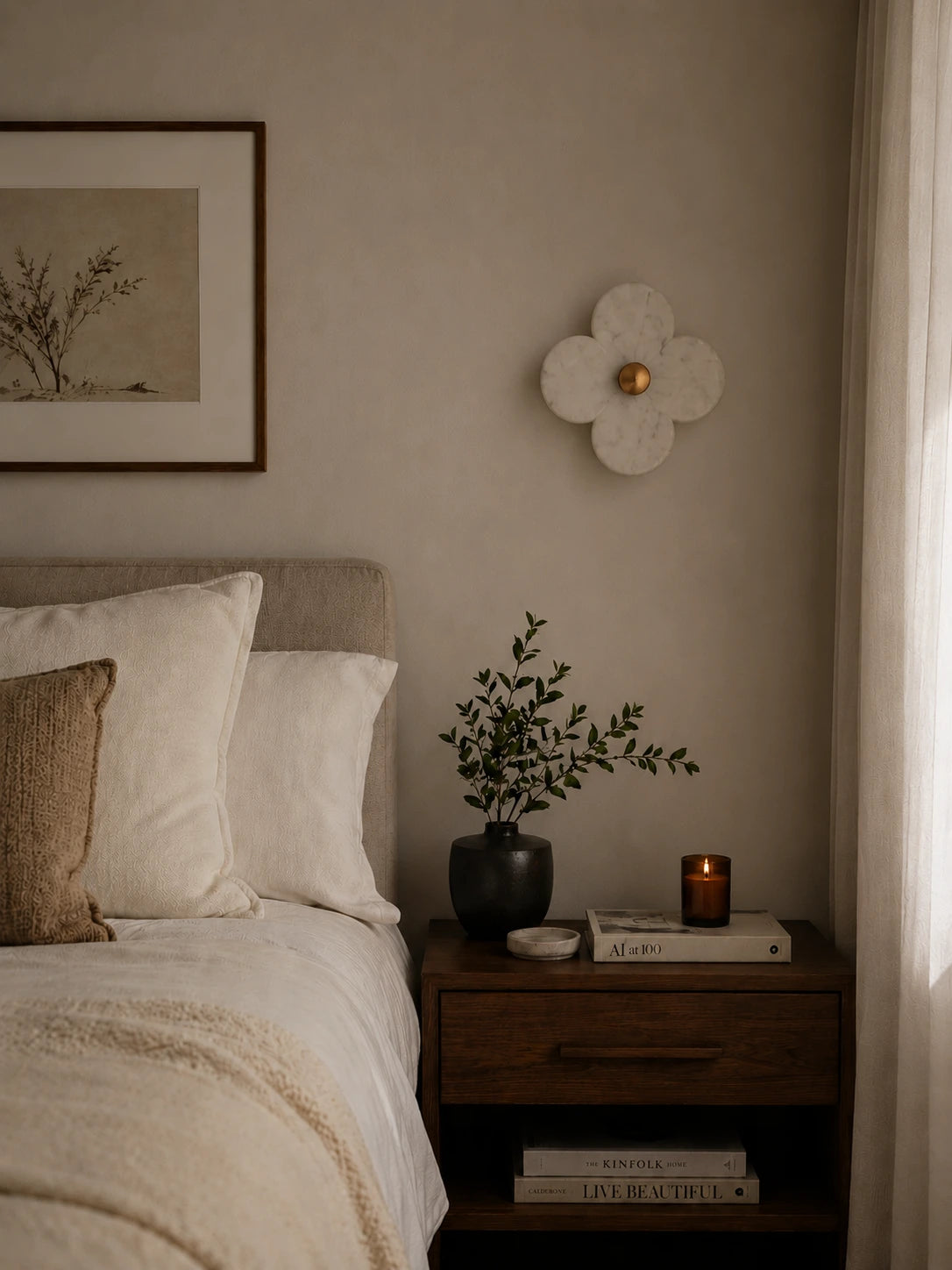
Stone is where integrated LEDs earn their place. On the Marmo Calacatta Viola marble sconce, the LED sits flush within the stone and lights up the veining evenly. A globe would need a deeper body and could leave a bright patch. You can browse more fittings like this in our LED wall sconces collection.
Frequently asked questions
Can I put a smart globe in an integrated LED wall light?
No. An integrated LED wall light has no socket, so there is nowhere for a smart globe to go. For app or voice control, a licensed electrician can fit a smart switch or smart dimmer that suits the light.
Are integrated LED wall lights brighter than ones with a globe?
Not automatically. Brightness depends on the lumen output of the LED or globe and on how much the shade blocks, so compare lumens rather than the type of fitting.
Is a G9 wall light the same as an integrated LED?
No. G9 is a small two-pin socket, and the LED capsule pulls out and can be replaced. An integrated LED is fixed inside the fitting.
Can I replace a hardwired integrated LED wall light myself?
No. In Australia, removing and installing a hardwired light is electrical work that must be done by a licensed electrician under the AS/NZS 3000 wiring rules. A plug-in fitting can be unplugged and swapped by anyone.
Do integrated LED wall lights get hot?
The body can get warm, because a good share of the power going into LEDs turns into heat that has to escape through the fitting. That is why a solid metal, glass or stone body tends to run better than a thin plastic one.






0 comments