

Australians have put marble on kitchen benches and vanities for decades. On a wall light it does a different job. It gives the fitting weight and pattern, and where the stone is cut thin it lets a little warm light through the edges.
This guide covers how marble behaves as a lighting material, which marbles you will come across, what to check before you buy, and how to care for a marble wall light so it still looks right in fifteen years.
What makes marble different as a light?
Marble is limestone that has been recrystallised under heat and pressure deep underground. That process gives it a dense surface that takes a polish well, and the veining that makes every slab different.
Two properties matter for lighting. The first is translucency. Thin marble passes a small amount of light, so a well-cut shade glows softly at its thinner edges. Thick marble passes almost none, and the fitting reads as a solid sculptural object with light spilling around it. The second is that no two pieces match. The veining on your light will not be identical to the product photo, and that is the point of buying real stone.
Marble vs alabaster vs travertine: what is the difference?
| Alabaster | Marble | Travertine | |
|---|---|---|---|
| How it handles light | Glows through the whole body | Glows at thin edges | Barely transmits, light washes around it |
| Surface | Soft, cloudy, warm | Dense, polished, strong veining | Porous, pitted, earthy |
| Hardness | Softest, handle gently | Harder and more durable | Moderate |
| Best for | A glow from within | Pattern and presence | Texture and a wabi-sabi look |
If you want the light itself to glow, choose alabaster. If you want a fitting that reads as a piece of stone with real pattern, choose marble. Our alabaster, travertine or marble guide compares the three in more depth.
Which types of marble are used in wall lights?
Carrara is the familiar white-to-grey marble with soft, feathery veining. It is the safe pick for a room that already has a lot going on.
Calacatta is whiter, with bolder veining, often grey or gold. Calacatta Viola goes further, with deep violet and burgundy veins that make the stone the focal point. Our Marmo is cut from Calacatta Viola, with an integrated LED set flush into the stone so the light shows off the veining. It suits a wall where you want the light to be noticed.
Dark marbles such as Nero Marquina work the other way round. Against a dark wall they almost disappear until they are lit.
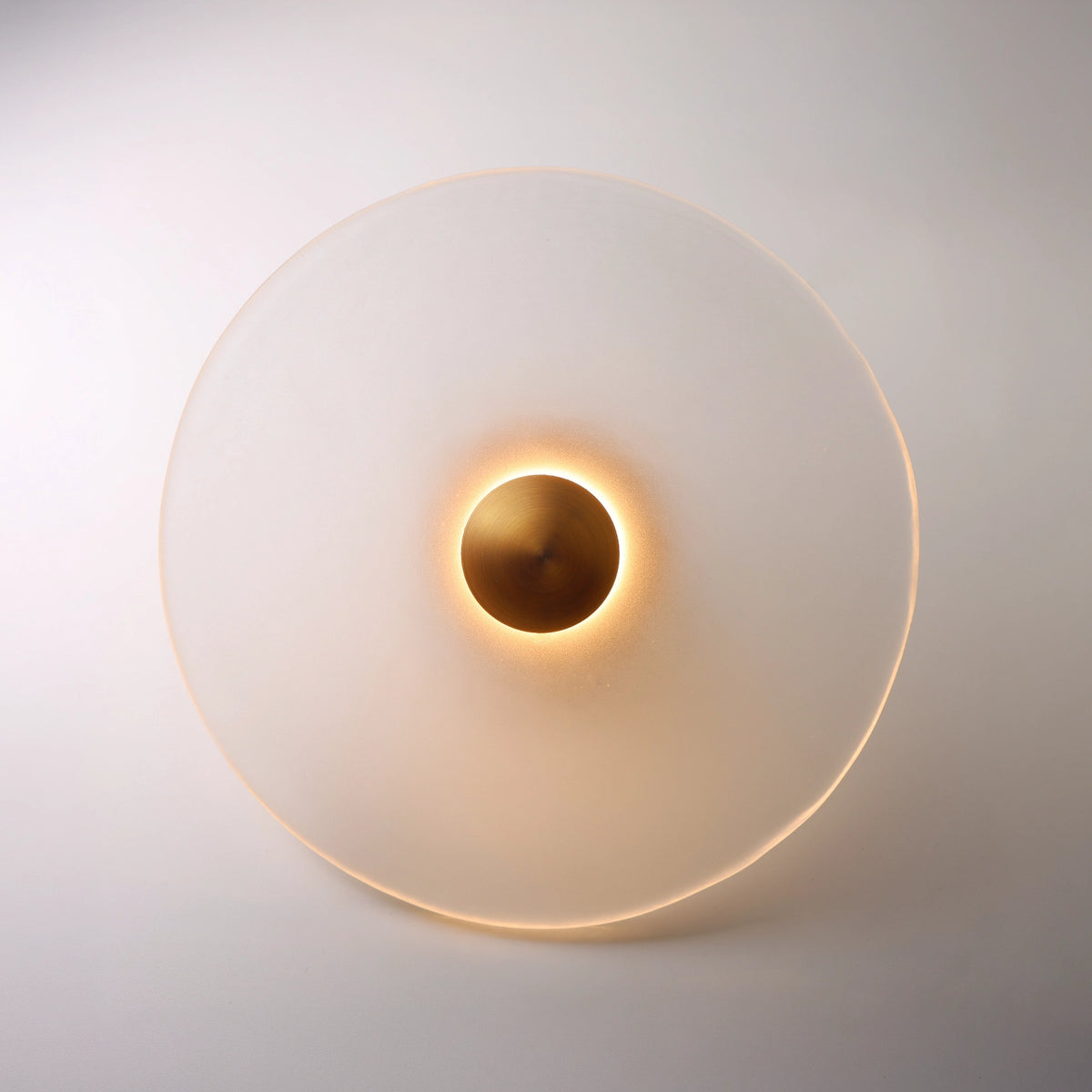
The Marquise is our quieter marble option: an organic disc shade in genuine marble, glowing warm white through the stone. Both marble pieces are available by enquiry, and you can see them with the rest of our stone fittings in natural stone wall lights.
What should you check before buying a marble wall light?
Weight and fixing
Marble is heavy, often several times the weight of a metal fitting of the same size. On plasterboard, the backplate needs to go into a stud or a cavity fixing rated for the load. Raise this with your electrician before install day, not on it. If the weight is not listed, ask for it when you enquire.
How much it glows
If the listing shows the fitting lit and unlit, compare the two. A thin shade shows warmth at the edges when lit. If both photos look the same, the stone is too thick to pass light. That is fine if you want a sculptural piece, and disappointing if you expected a glow.
Light source
Choose LED. Integrated LED is the neatest option in stone, because it runs cool and sits exactly where the designer intended. If the fitting takes a replaceable globe, use LED and never halogen.
Where it will go
Marble is more porous than most people expect, and our marble fittings are made for dry indoor areas. Keep them out of bathrooms, laundries and anywhere outdoors. Australian UV, rain and salt air dull and stain marble quickly. If you need a light for a wet or exposed spot, read our IP ratings guide first and choose a fitting rated for it.
How do you clean and care for a marble wall light?
A wall light escapes the abuse a benchtop gets. No wine, no lemon juice, no hot pans. Care is mostly dust and restraint.
- Switch the light off and let it cool.
- Dust every week or two with a dry microfibre cloth. That covers most of it.
- For a mark, wipe with a cloth barely dampened with warm water, then dry it straight away.
- Never spray liquid directly at the fitting.
Keep vinegar, lemon, bleach and bathroom cleaners well away. Acids etch marble and leave a dull patch you cannot polish out at home. Abrasive pads and powders scratch a polished surface, so skip those too.
Are fissures and colour variation a fault?
No. Natural marble has fissures, colour shifts and the odd tiny surface pit, because that is how the stone formed. A fresh chip from a knock is different, and worth raising with the retailer straight away.
Where do marble wall lights look best?
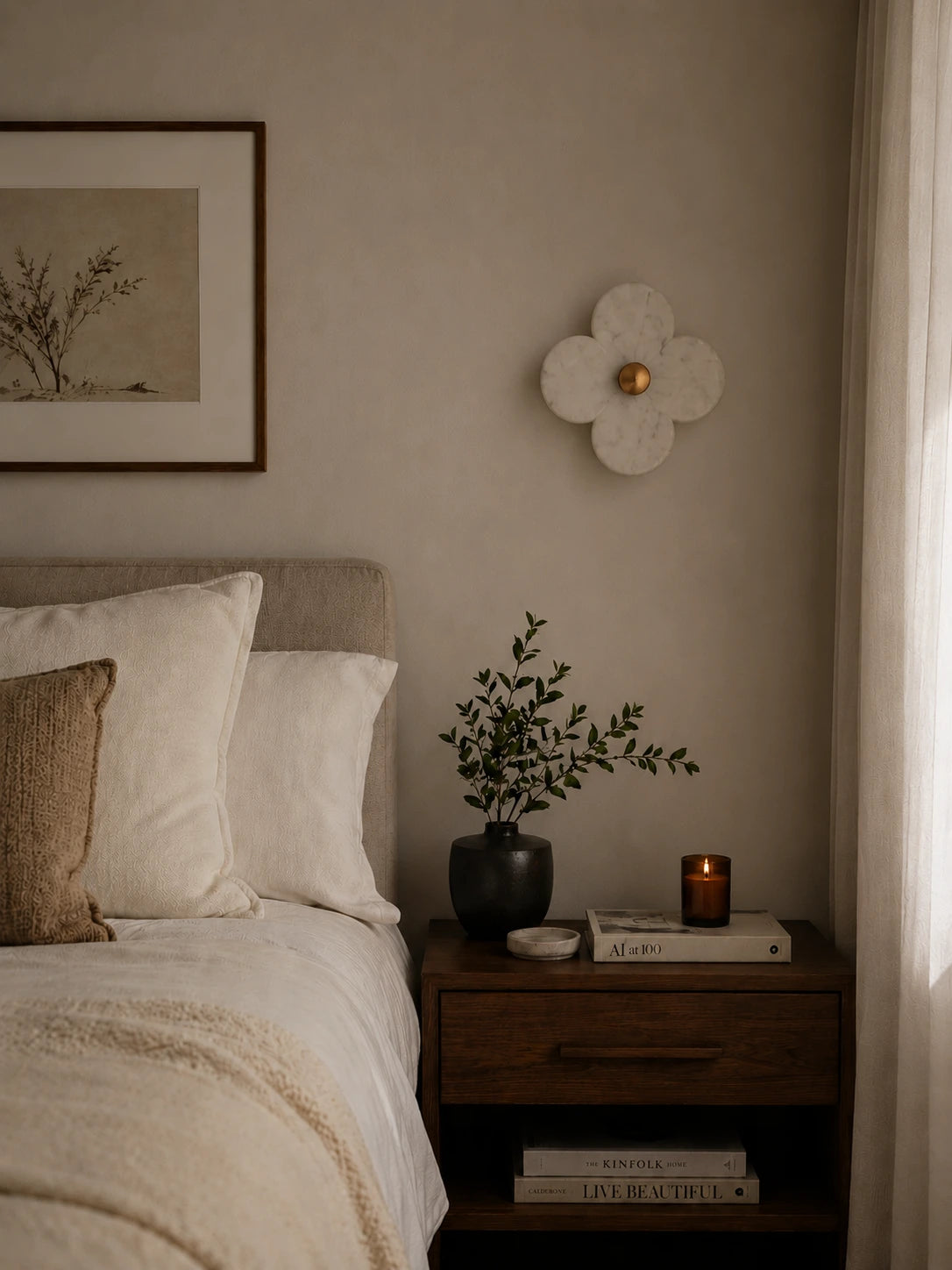
Anywhere you want some weight and permanence: either side of a bed, along a hallway, beside a fireplace or flanking a piece of art. Because the stone carries so much pattern, keep the wall behind it plain. A flat painted wall lets the veining do the talking.
Think about the metal next to it. Brushed brass warms up white marble. Black suits cooler grey stone. Our brass care guide explains how brass finishes age if you are pairing the two.
Frequently asked questions
Do marble wall lights glow?
Only where the stone is cut thin. Thin marble passes a little warm light at the edges. Thick marble passes almost none and reads as a solid sculptural fitting.
Can a marble wall light go in a bathroom?
Our marble fittings are designed for dry indoor areas, so keep them out of bathrooms. Marble is porous and moisture can stain it.
How do you clean a marble wall light?
Switch it off, dust it with a dry microfibre cloth, and wipe marks with a cloth barely dampened with warm water. Never use vinegar, lemon or bathroom cleaners, because acids etch marble.
Is marble or alabaster better for a wall light?
Alabaster if you want the whole shade to glow. Marble if you want stronger veining and a harder, more durable stone.
Are marble wall lights heavy?
Yes, heavier than metal fittings of the same size. On plasterboard, fix the backplate into a stud or a cavity fixing rated for the weight.






0 comments