

A pendant lights a place. A wall light lights a room. That one line settles most of the wall lights vs pendant lights question, usually asked while standing in a half-finished renovation deciding what to tell the electrician.
They are not really competitors. They sit at different heights, throw light in different directions and suit different rooms. Here is which one belongs where in an Australian home, and when to use both.
What is the difference between a wall light and a pendant?
A pendant hangs from the ceiling on a cord or rod and pushes light down onto whatever sits beneath it. It works best when there is one spot you want lit and looked at, such as a dining table or a kitchen island.
A wall light mounts on a vertical surface and throws light sideways, up the wall, down the wall, or both. It lights the edges of a room, adds warmth at eye level, and takes up no ceiling or floor space.
When should you choose a pendant?
- Over a dining table, where the pendant marks the centre of the room.
- Over a kitchen island, where you need focused task light on the bench.
- In a double-height void or stairwell, where a long drop fills the vertical space.
When should you choose a wall light?
- Under a standard 2.4 m ceiling in any area people walk through, where a hanging fitting gets in the way.
- In narrow spaces like hallways, stairs and beside a bed.
- When a room feels flat at night and you want warmth without more brightness.
- When you want to free the bedside table from a lamp.
- When the wall itself deserves light, such as a textured render, stone or artwork.
Which is better in each room?
Kitchen
Pendants over the island, usually two or three depending on bench length. Wall lights earn their place at the ends of a galley, above open shelving, or in a butler's pantry where a pendant would be in the way. Our kitchen wall lighting guide goes into the detail.
Dining room
The clearest pendant room in the house. One statement pendant or a linear fitting, centred over the table. Add wall lights on the side walls as background light, so the room does not go dark when you dim the pendant for dinner. A sculptural piece like the Solara works well here, because it reads as art on the wall by day.
Bedroom
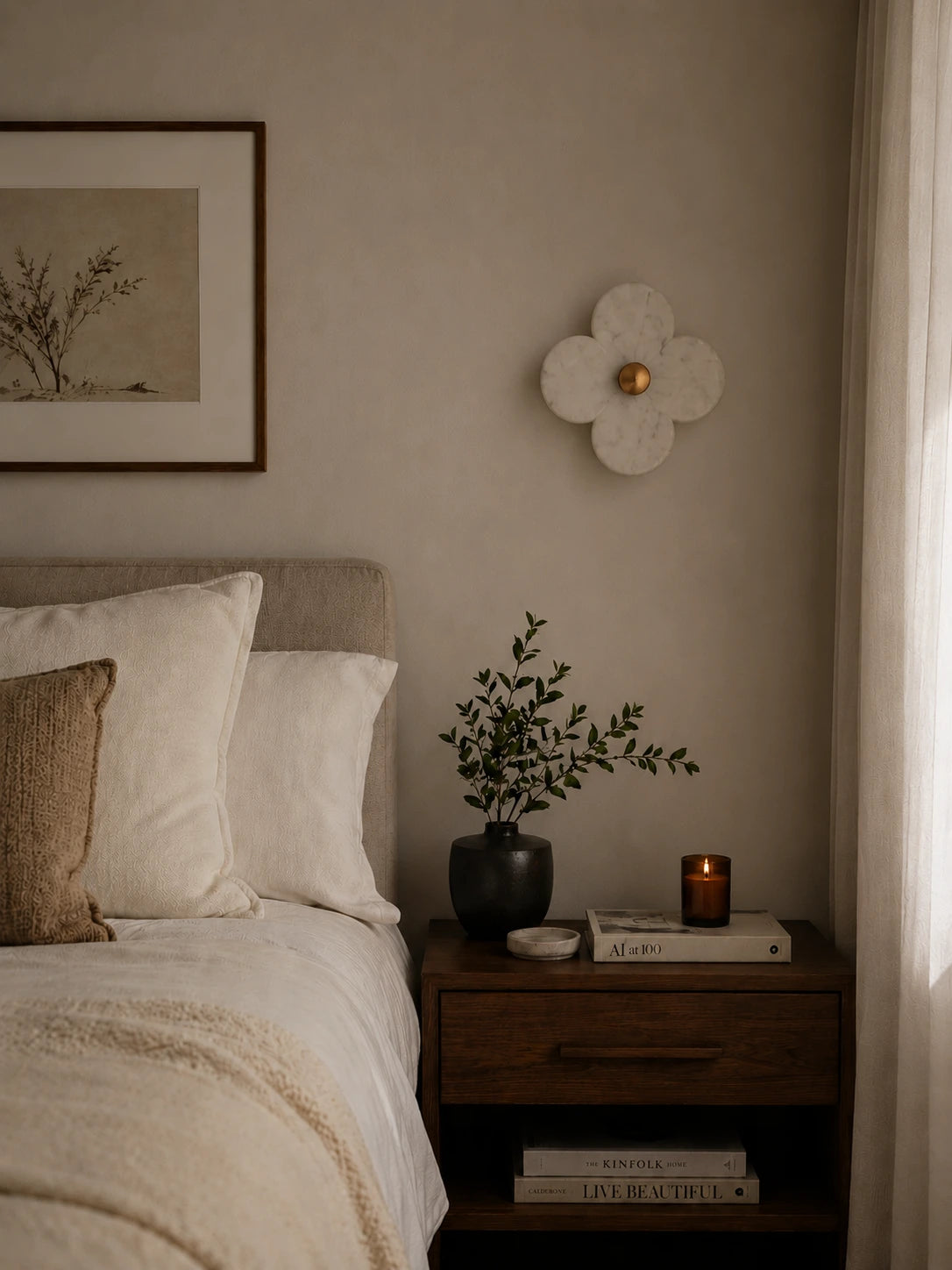
Wall lights, nearly every time. Bedside sconces give directional reading light and clear the whole table surface. Pendants beside a bed photograph well, but the drop height has to be exactly right, and moving them later means more wiring. Browse bedroom wall lights for the options.
Hallways and stairs
Wall lights. Corridors are narrow, and a hanging fitting on a stair is a head-height hazard unless the void is tall. A run of sconces every 2 to 2.5 metres gives rhythm and even light. See hallway and entryway wall lights.
Bathroom
Wall lights either side of the mirror, so your face is lit evenly rather than from above. Whatever fitting you choose, check the IP rating and the bathroom zone rules before you buy. Our own indoor range is designed for dry areas, so keep it well clear of the shower and bath. The IP ratings guide explains what each zone needs.
Living room
Usually both. A pendant or ceiling fitting gives the general light, and wall lights around the edges do the work that makes the room feel finished at night. If you can only pick one, pick wall lights. Most Australian living rooms already have plenty of downlights, and what they lack is light at eye level. Living room wall lights has fittings sized for this job.
Does ceiling height decide it?
Often, yes. The standard Australian ceiling is 2.4 m, which is low for a pendant anywhere people walk. Over a table it is fine, because nobody walks under it, and a gap of around 75 to 85 cm between the tabletop and the bottom of the pendant works well. Over a walkway you want the bottom of the pendant at least 2 m off the floor, which leaves very little drop on a 2.4 m ceiling.
Wall lights have no such limit. Most sit between 150 and 170 cm off the floor, and they never get in anyone's way. The wall light height guide has the figures room by room.
Is one easier to install than the other?
Both are hardwired and both must be installed by a licensed electrician. What changes the job is what is already in place. If there is an existing ceiling point, hanging a pendant is usually simple. A new wall light point means running cable down inside the wall, which takes more work, especially in brick or rendered walls. Ask your electrician to look at both options before you commit to a layout, and see our wall light installation guide for the factors that affect the job.
Renting? Talk to your landlord before any wiring work. Our plug-in vs hardwired guide covers what renters can do without an electrician.
How do you use pendants and wall lights together?
The best-lit rooms use layers. A reliable setup: a pendant as the focal point, wall lights around the edges for warmth, and downlights kept to a minimum on their own switch or dimmer. You get a bright setting for cooking and cleaning, and a low, soft setting for the evening. Our guide to layering lighting explains how the three layers work.
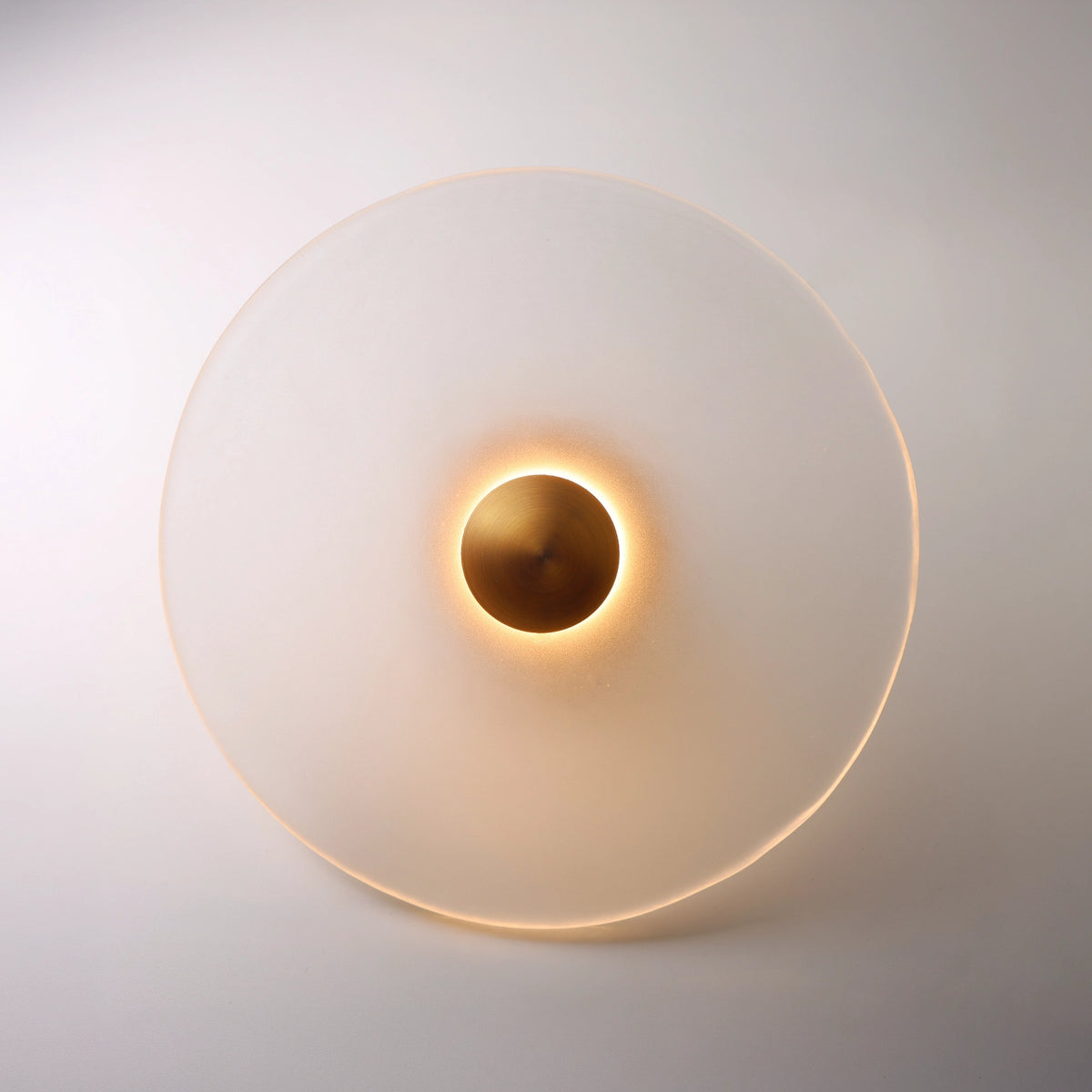
If you want the wall light to hold its own next to a statement pendant, a disc shape sits flat and quiet on the wall. The Alba glows warm through natural alabaster. The Orbis does a cleaner version in frosted glass with a hidden LED ring.
Most homes end up with a couple of pendants and more wall lights than the owners first planned. That is usually the right ratio.
Frequently asked questions
Are wall lights or pendants better for a bedroom?
Wall lights in most bedrooms. They give directional reading light, free up the bedside table and suit a standard 2.4 m ceiling.
Can you use pendants and wall lights in the same room?
Yes, and it usually looks better. Use the pendant as the focal point and wall lights around the edges for warm background light.
How low should a pendant hang over a dining table?
Leave around 75 to 85 cm between the tabletop and the bottom of the pendant. Over a walkway, keep the bottom at least 2 m from the floor.
Are wall lights good for low ceilings?
Yes. Wall lights sit around 150 to 170 cm from the floor and take up no headroom, which makes them the better choice under a 2.4 m ceiling in areas people walk through.
Do pendants and wall lights need an electrician?
Yes. Both are hardwired fittings, and in Australia fixed wiring must be installed by a licensed electrician.






0 comments