

Most people start smart lighting with a couple of app-controlled globes in a table lamp, then wonder whether the same trick works on their wall lights. It can, but wall lights make it trickier. They are usually hardwired, run off a switch that gets used every day, and often hide the light source behind glass, ceramic or stone. Some have no replaceable globe at all.
That changes which smart option makes sense. Here are the three ways to do it in an Australian home, and how to set it up so the whole household can use it.
What does "smart" mean for a wall light?
A smart wall light is one you can control without touching the wall switch. In practice that means four things: switching it from your phone or by voice, dimming it, putting it on a schedule, and grouping it with other lights so a room responds together. Colour-changing exists, but on a wall light most people stick to warm white.
Smart is a control layer. You can add it to a fitting you already own, or buy a fitting with it built in.
Option 1: smart globes
The easiest route. Swap the globe for a smart one, pair it with an app, done. Smart globes are easy to find in the big Australian bases (E27, B22, and to a lesser degree E14 and GU10) and no electrician is needed.
There are two catches for wall lights.
The first is the wall switch. A smart globe only listens while it has power. Flick the switch off and the app goes dead until someone flicks it back on. In a bedroom or hallway where the switch gets used all the time, this wears thin quickly.
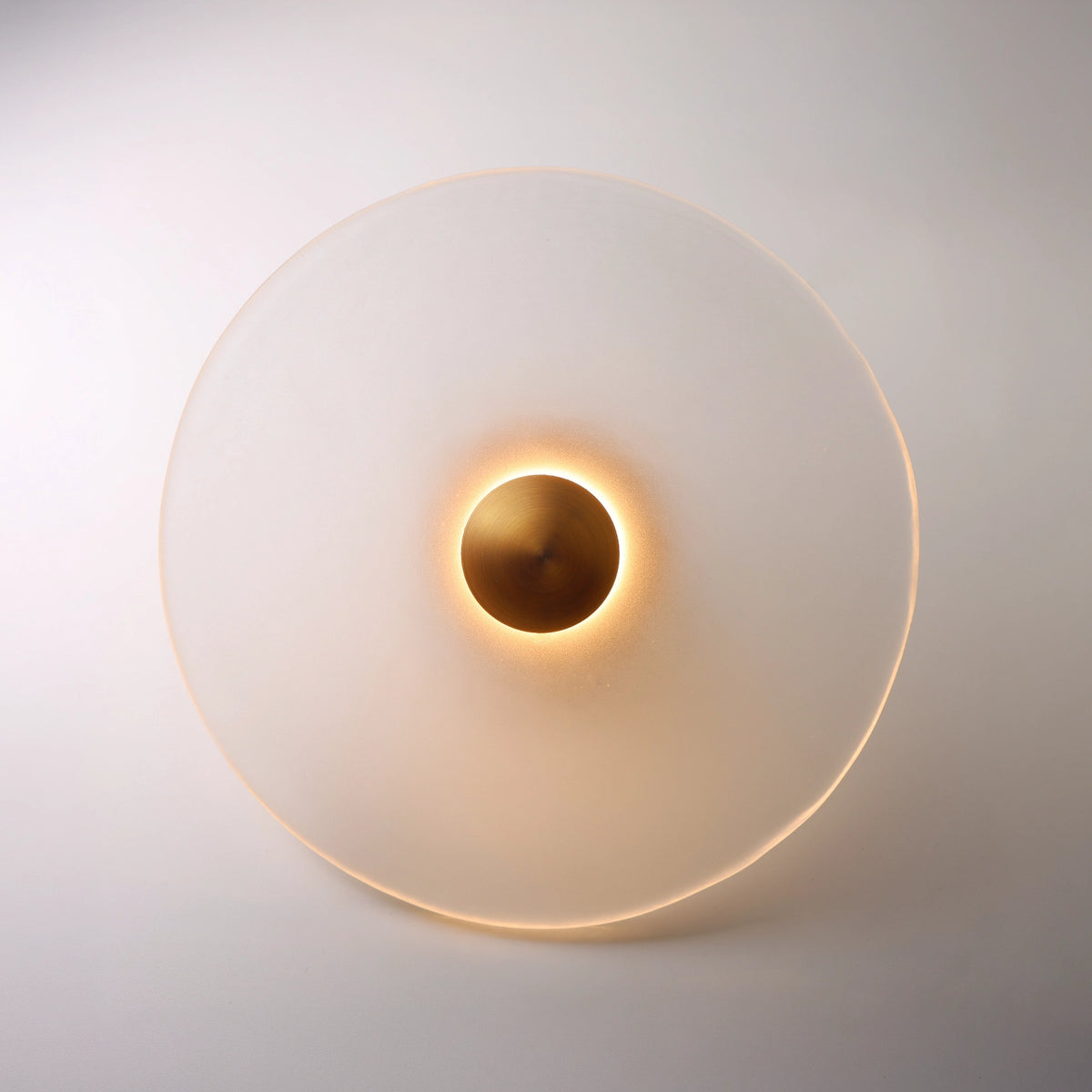
The second is the globe itself. Many designer wall lights take small caps like G9, and smart G9 globes are far harder to find than smart E27s. Our ceramic Solara and Volta both take a G9, for example. Other fittings, like the Orbis, use an integrated LED ring with no globe to swap at all. For fittings like these, smart globes are off the table and a smart switch is the answer.
If you are shopping for a new fitting and want to use smart globes, check the cap type on the product page first. Our bulb guide explains how to tell the caps apart.
Option 2: smart switches and dimmer modules
Here the fitting stays as it is and the switch does the smart work: dimming, schedules and app control.
This is the better choice for most hardwired wall lights, and the practical choice for fittings with an integrated LED. The wall switch keeps working as a normal switch, so nobody gets stuck in the dark. Every light on that circuit becomes controllable at once, which means a pair of bedside sconces behaves as one.
A smart switch is fixed wiring, so a licensed electrician has to install it. Ask them two things before you buy any hardware:
- Is there a neutral wire at the switch? Many smart switches need one, and older Australian homes often lack it.
- Is the dimmer module compatible with the LED fitting or globe? Mismatches cause flicker, buzz or a light that will not dim below half.
Our guide to dimming wall lights covers the compatibility question in more depth.
Option 3: fittings with smart control built in
Some LED wall lights come with Bluetooth or Wi-Fi control built in, run through the manufacturer's app. They are tidy and need no extra hardware. The risk is that you are tied to that brand's app for the life of the fitting. If the app is discontinued, you are left with an ordinary light.
Wi-Fi, Bluetooth, Zigbee or Matter?
The protocol decides how reliable the system feels day to day.
- Bluetooth: cheap and simple, but short range and often tied to one phone. Fine for one or two lights in one room.
- Wi-Fi: no hub, works from anywhere, but a dozen Wi-Fi devices can crowd a home network. Best for a handful of lights.
- Zigbee or Thread: needs a hub or border router, but is fast and holds up well once you pass six to eight lights.
- Matter: the cross-brand standard that works with Apple Home, Google Home and Amazon Alexa. If you are starting from scratch, buy Matter-compatible gear and you will not be locked into one ecosystem.
How do you set it up so people actually use it?
The most common failure is a system that only works from one person's phone. A few habits prevent it.
- Keep the physical switch working. If a guest can walk in, flick a switch and get light, the system has failed safely.
- Name lights by where they are. "Hallway sconces" beats "Light 3".
- Group before you automate. Get the bedside pair responding together first, then add schedules.
- Set a warm, low scene for the evening, around 2700K at low brightness after dinner.
- Add everyone in the house to the app.
Where is smart control worth it?
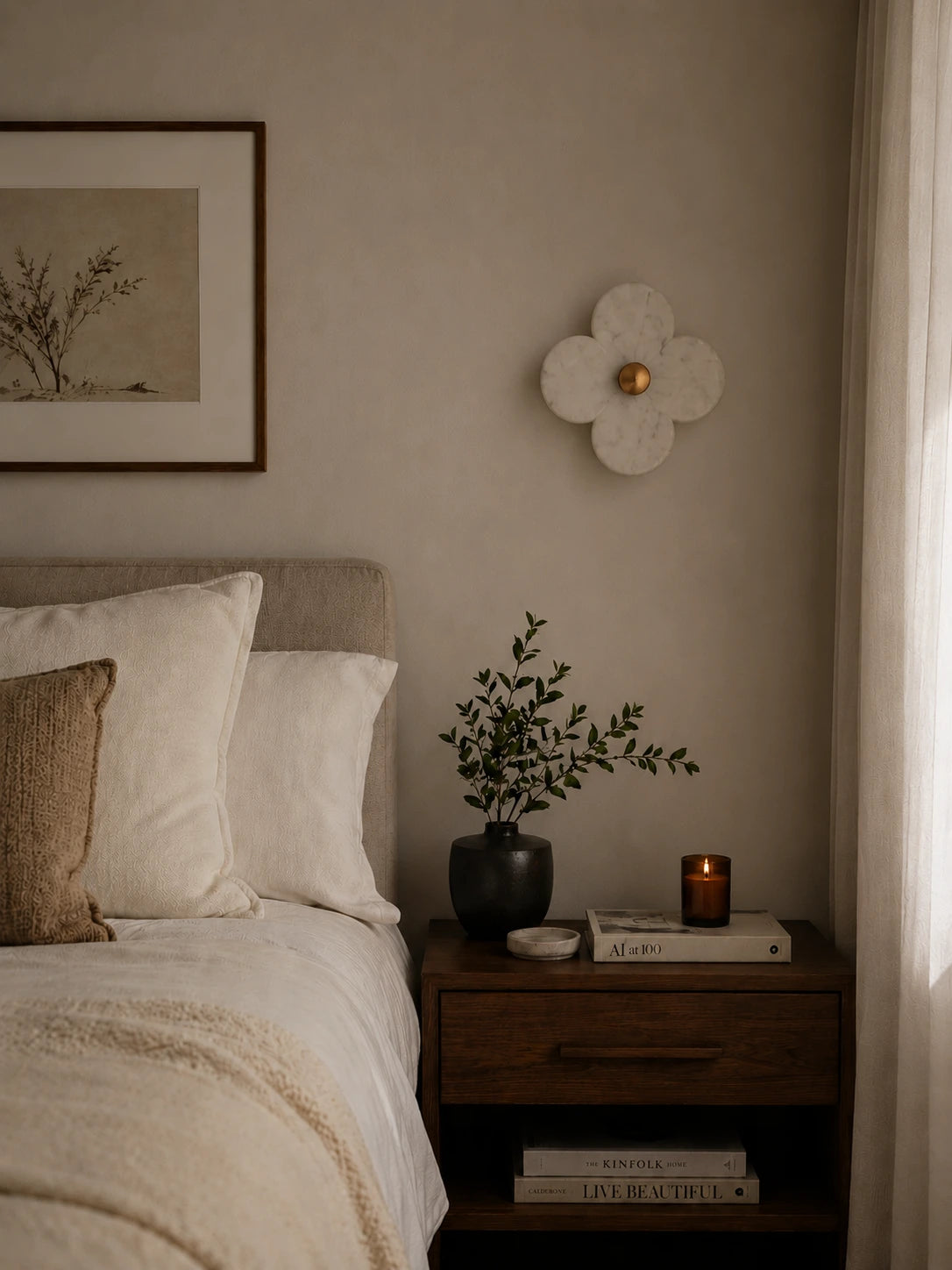
Three spots. Bedside wall lights, where dimming from bed without reaching for the switch is a real daily improvement. Hallways and stairs, where a low overnight level on a schedule saves fumbling for a switch at 3am. Entry and outdoor lights, where a sunset-to-sunrise schedule beats remembering to turn them on.
It is less useful on feature lights you only turn on for guests, or anywhere a plain dimmer does the job. For a lot of households, a good LED-compatible dimmer gives them the thing they wanted most from smart lighting: control over brightness. The Alba, Petalo and Volta can all be dimmed with a compatible dimmer. Browse fittings for the rooms where smart control pays off most in bedroom wall lights and hallway and entryway wall lights.
Frequently asked questions
Can you make existing wall lights smart?
Yes. Either swap the globe for a smart globe, if the fitting takes a common cap like E27 or B22, or have an electrician fit a smart switch or dimmer module, which works with most hardwired wall lights.
Do smart globes work if the wall switch is off?
No. A smart globe needs power to respond, so the wall switch has to stay on. That is why smart switches suit wall lights that are switched often.
Can integrated LED wall lights be made smart?
Usually, through a smart switch or dimmer module installed by a licensed electrician. Check that the module is compatible with the fitting's LED driver.
Do smart light switches need a neutral wire?
Many do, and some older Australian homes do not have one at the switch. Ask your electrician to check before you buy.
Which smart home standard should I choose?
Matter, if you are starting fresh. It works across Apple Home, Google Home and Amazon Alexa, so you are not locked into one brand.






0 comments