

A plug-in wall sconce is the one wall light an Australian renter can put up without an electrician. It mounts to the wall like a picture hook would, and a cord runs down to an ordinary 240V power point. No fixed wiring means no licensed trade required.
One thing up front: Battii's own range is hardwired, so we do not sell plug-in fittings. If you are renting and a hardwired light is not an option, this guide shows how to put up a plug-in sconce properly, so it sits straight, stays on the wall and does not look like an afterthought. If you are still deciding between the two types, start with our plug-in vs hardwired comparison.
Is it legal to install a plug-in wall light yourself in Australia?
Yes. Plugging an appliance into a power point is not electrical work. What you cannot do yourself is anything involving fixed wiring: adding a power point, wiring a light into the wall, or opening up a plug. Those jobs need a licensed electrician in every state.
Before you buy, check two things on the fitting or its box:
- It is rated for 240V, 50Hz. A fitting made for the 110V US market is not safe here, and a travel adaptor does not change that.
- It carries the RCM, the Regulatory Compliance Mark that shows electrical products meet Australian requirements. Be careful with overseas marketplace listings that do not show it.
If you rent, also read your lease. Many allow small picture hooks but not larger holes, and some ask you to get permission first.
What do you need?
- Your plug-in sconce
- Tape measure, pencil and a spirit level
- A stud and cable detector
- A drill with the right bits for your wall
- Wall plugs or cavity fixings rated for the fitting's weight
- Screwdriver
- Paintable cable cover (raceway) or adhesive cable clips
What kind of wall do you have?
This decides your fixing, and it is the part most guides skip.
Plasterboard
Most houses and apartments built in recent decades have plasterboard internal walls. Knock on it and it sounds hollow. If your detector finds a timber or steel stud where you want the light, screw into that. If not, use a cavity fixing such as a spring toggle or a metal hollow-wall anchor. Plain plastic plugs in plasterboard work loose over time.
Brick veneer
Brick on the outside, plasterboard on the inside. From inside the room it behaves exactly like plasterboard, so treat it that way.
Double brick or solid masonry
Common in older homes and many older apartment blocks. It sounds solid when you knock. Use a masonry bit and proper masonry plugs. It takes longer to drill, and once the fitting is up it is not going anywhere.
How do you install a plug-in wall sconce?
- Pick the spot, then plan the cord. Decide where the power point is and how the cord will get there before you mark anything. A bookshelf, bedhead or cabinet in the way is much easier to spot now than after drilling.
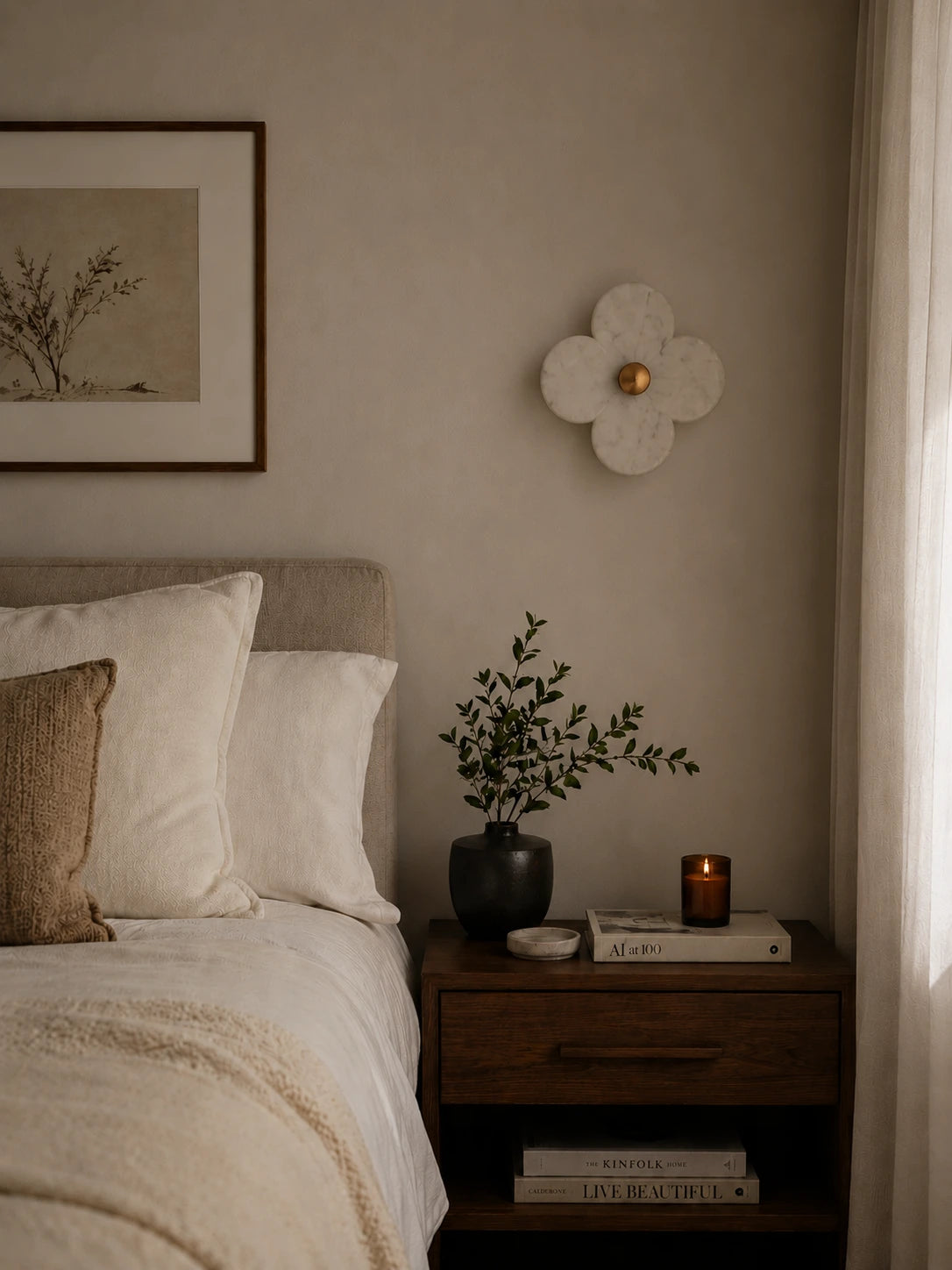
- Mark the height. For general light, centre the fitting around 150 to 165 cm from the floor. Beside a bed, 150 to 160 cm works for most people. Our height guide has figures for every room.
- Scan the wall. Run the cable detector over the area. Concealed cables often run straight up, down or sideways from power points and switches, so never drill directly in line with one. If the detector beeps, move the fitting.
- Level and mark the holes. Hold the bracket in place, check it with the spirit level, and mark through the screw holes. A slight tilt is obvious once the light is on.
- Drill and fix. Drill the right size hole for your plug or cavity fixing, fit it, and screw the bracket on. Tighten until firm, but do not overdo it in plasterboard or the fixing will spin.
- Hang the fitting and fit the globe. Attach the sconce to the bracket, fit the globe it specifies, and use LED so it runs cool.
- Tidy the cord, then plug in. See the next section.
Can you hang a plug-in sconce without drilling?
We would not. Adhesive strips are designed for picture frames, not for a light fitting with weight, a cord that gets tugged, and a globe that warms the wall around it. A light dropping off the wall at night is a real risk, especially beside a bed.
If you truly cannot make holes, a floor lamp or a table lamp is a safer choice than a stuck-on sconce. On exposed brick, some renters use brick clips that grip a single brick without drilling. Check the clip's rated load and the weight of your fitting before trusting one.
How do you hide the cord?
This is what makes a plug-in sconce look deliberate.
A paintable cable cover is the neatest option. Run it straight down from the fitting to the power point, cut to length, stick it on, then paint it the wall colour. On a white wall, a white cover almost disappears.
The other trick is placement. Put the sconce above a bedside table, sideboard or bookshelf and let the cord drop behind the furniture. Small adhesive cable clips every 30 cm or so keep it from sagging.
Whichever you choose, keep the cord where it will not be tripped on, pulled by a child or pinched behind a bedhead.
Where should you not use a plug-in wall light?
Bathrooms and laundries. Water and a trailing cord near a power point are a bad mix, and bathroom lighting has zone rules for a reason. If you want lights beside a bathroom mirror, that is a job for a licensed electrician using a fitting rated for the location. Our IP ratings guide explains what each area needs.
Hallways are a poor fit too. A cord running down a hallway wall gets knocked, and there is rarely a power point where you need it.
When is hardwiring worth it instead?
If you own your home, or your landlord agrees, a hardwired wall light is the cleaner result: no cord, switched from the wall, and fixed properly by a licensed electrician. It is also the only way to get most designer fittings, which are made to be wired in. Our range is all hardwired 240V. Browse the bedroom wall lights or the full wall light range if you are planning that route.
Frequently asked questions
Do plug-in wall sconces need an electrician in Australia?
No. A plug-in sconce plugs into an existing power point, so no electrical work is involved. Any fixed wiring, such as adding a power point, must be done by a licensed electrician.
What should I check before buying a plug-in wall light?
Check that it is rated for 240V, 50Hz and carries the RCM mark. Avoid fittings made for 110V markets.
Can I use adhesive strips to hang a wall sconce?
We do not recommend it. Adhesive strips are made for picture frames, not light fittings with weight and a cord. Use proper wall fixings, or choose a floor or table lamp if you cannot drill.
How high should a plug-in wall sconce go?
Around 150 to 165 cm from the floor to the centre of the fitting for general light, and around 150 to 160 cm beside a bed.
How do I hide the cord from a plug-in wall light?
Use a paintable cable cover running straight down to the power point, or place the sconce above furniture so the cord drops out of sight behind it.






0 comments