

A single downlight in the middle of a nursery ceiling is the worst light in the house for a baby. Lie a newborn on a change table and that downlight is the first thing they see. Wall lights fix it, because they sit to the side and throw light across the room instead of down into a small face.
This guide covers where to put wall lights in a nursery or kids' room, how bright and how warm they should be, and the safety points that matter in an Australian home.
Why do wall lights suit a nursery or kids' room?
Glare is the main reason. A baby in a cot or on a change mat spends a lot of time on their back, looking straight up. A bright ceiling fitting at 2am wakes them properly, which is the opposite of what you want during a night feed.
A wall light at adult eye height lights the room from the side. You can see the nappy, the bottle and the floor, and nothing bright is pointing at the cot. Wall lights also keep lamps and cords off low furniture, which starts to matter once a toddler can pull themselves up.
Where should wall lights go in a nursery?
Put them on a side wall, not above the cot. The best spot is usually beside the feeding chair, so the light falls on your lap and the baby while the cot stays in soft shadow.
For height, centre the fitting around 150 cm from the floor. That is standing eye level for most adults, well above the cot rail and out of reach of small hands. Our wall light height guide has the numbers for every room if you are planning the rest of the house at the same time.
Older kids' bedrooms
Once the cot becomes a bed, a wall light beside the bedhead turns into a reading light. Mount it off to one side of the pillow rather than directly above, so a child sitting up quickly does not knock their head on it. A pair either side of a double bed works the same way it does in an adult bedroom.
Bunk beds
Bunks need a light for each bunk. One light on the wall between them ends up lighting neither mattress properly. Mount each one to the side of its pillow, and pick a fitting that stays cool to the touch, because a child rolling over in the night will bump it sooner or later.
What makes a wall light safe for a child's room?
Three things: heat, reach and installation.
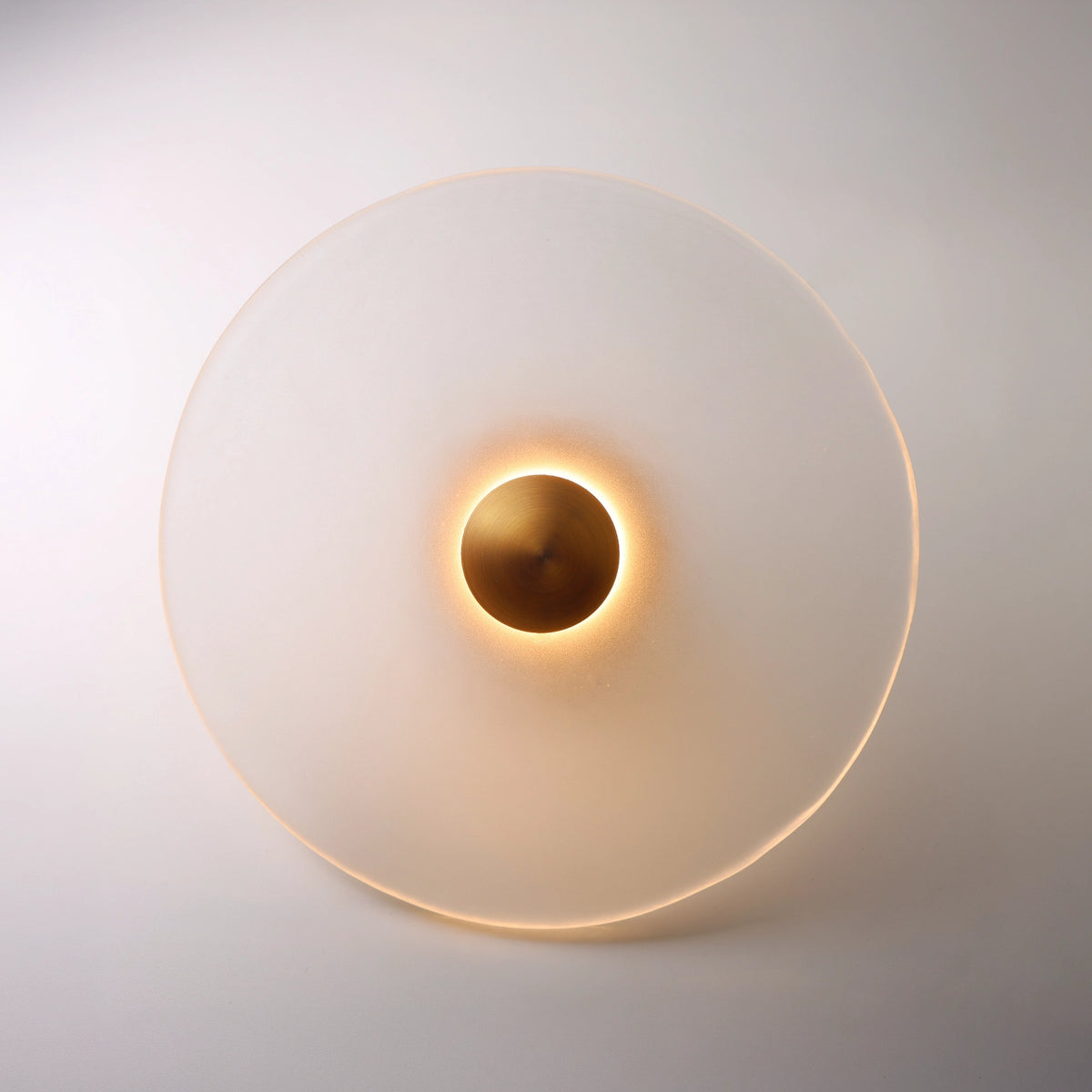
Heat first. Use LED only. A halogen globe runs hot enough to burn a small hand, while an LED fitting stays barely warm. Fittings with an enclosed or hidden light source are the best choice here. The Orbis has its LED ring sealed behind a frosted glass disc, so there is no globe to reach at all. The Volta tucks its frosted globe inside a ceramic cylinder.
Reach second. A hardwired wall light has no cord to pull or chew, which is the strongest safety argument for wiring it in. If you are renting and a hardwired fitting is off the table, keep any lamp cord behind furniture and never leave a loose cord hanging near a cot.
Installation third. In Australia, hardwired light fittings must be installed by a licensed electrician. That is the law everywhere, and in a child's room it is also the right call. Ask them to fix the backplate into a stud or a rated cavity fixing rather than bare plasterboard, because kids grab things.
What colour temperature and brightness suit a nursery?
Stay at 2700K warm white. Cool white in the 4000K range feels like a classroom at night and is more stimulating than you want at bedtime. Some parents go warmer again for a dedicated night-feed light.
For brightness, around 400 to 600 lumens per fitting is plenty. That is enough to read a picture book at close range and too soft to feel harsh. If the room doubles as a play space, keep the ceiling light for daytime and treat the wall lights as the evening layer.
A dimmer is the best upgrade you can add. Bright enough to find a dropped dummy, low enough that nobody fully wakes up. Check that the fitting and globe are dimmable and that your electrician fits an LED-compatible dimmer, or you will get flicker and buzz. Our guide to dimming wall lights explains what to ask for. In our range, the Volta, Alba and Petalo can be dimmed with a compatible dimmer.
Which materials work best?
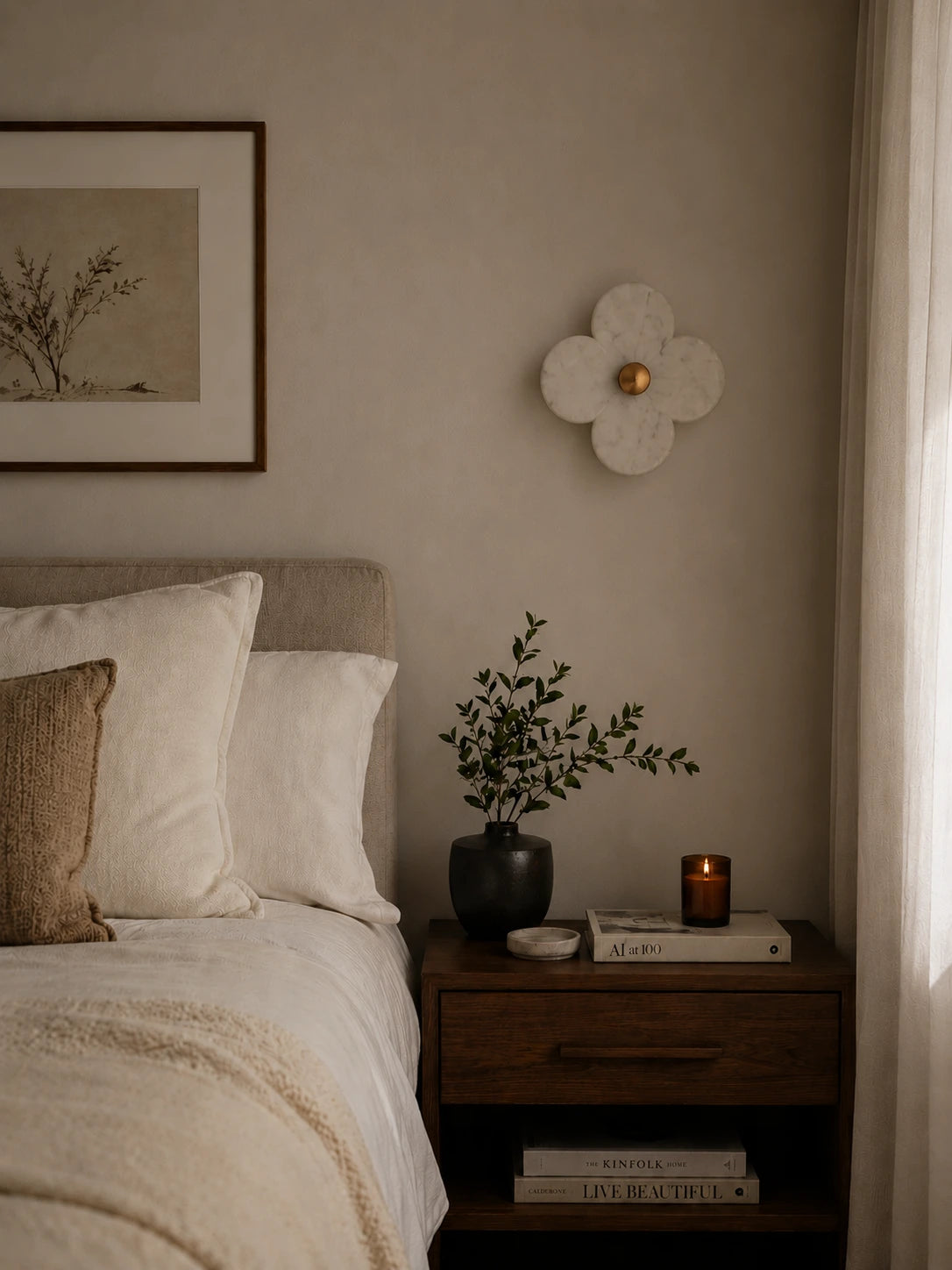
Anything that scatters the light. Frosted glass gives an even glow with no visible bright spot. Ceramic softens it further and adds some texture. Alabaster glows warm through the stone itself, which suits a calm nursery, though it is a softer stone and better kept on a wall a toddler cannot reach.
Skip the novelty shapes. A cloud or dinosaur light looks great for a year or two, then the child outgrows it and you are booking the electrician again. A plain, well-made sconce still suits the room when it becomes a teenager's bedroom and later a study.
How many wall lights does a kids' room need?
For a typical bedroom of 9 to 12 square metres, two wall lights make a good soft layer. Pair them with a ceiling light you use for cleaning up and searching for lost socks, and very little after dinner.
If you only fit one, put it by the feeding chair now and plan for a second by the bedhead later. Browse options that suit a bedroom in our bedroom wall lights collection.
Frequently asked questions
Are wall lights safe in a nursery?
Yes, if they use LED, have an enclosed or diffused light source and are hardwired by a licensed electrician. Mount them around 150 cm from the floor so they sit above the cot rail and out of reach.
Where should a light go in a nursery?
On a side wall, ideally beside the feeding chair, not directly above the cot. Light from the side lets you see what you are doing without shining into the baby's eyes.
What colour light is best for a baby's room?
Warm white, around 2700K or warmer. Cool white feels harsh at night and is more stimulating before sleep.
How bright should a nursery wall light be?
Around 400 to 600 lumens per fitting, ideally on a dimmer. That covers night feeds and bedtime stories without lighting the room like daytime.
Can I install a nursery wall light myself?
Not a hardwired one. In Australia, fixed wiring work must be done by a licensed electrician.






0 comments